


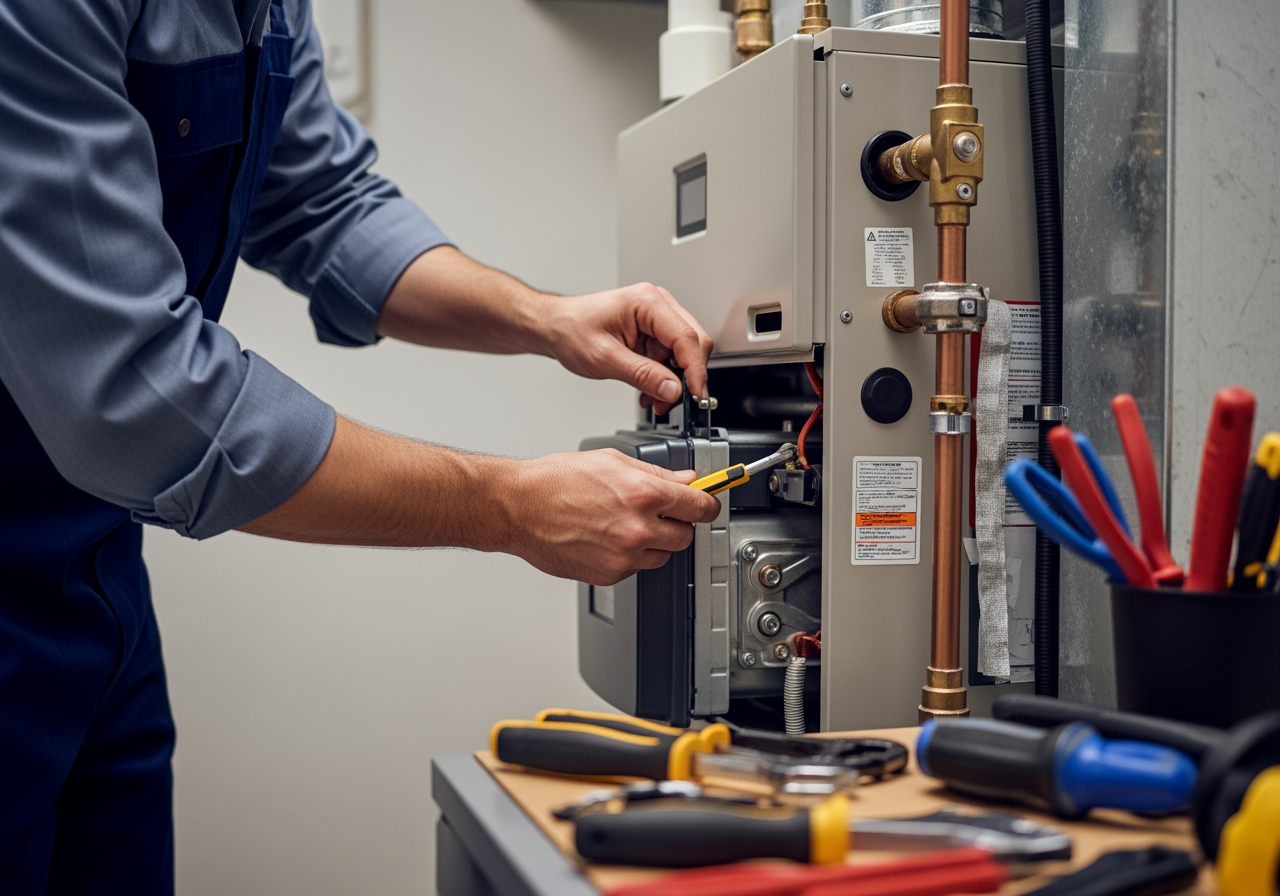
Beyond the Guesswork: Why Professional Furnace Diagnosis Matters in Orange County
A furnace that stops heating, cycles repeatedly, makes unusual noises, or produces weak airflow can have several possible causes. While homeowners can perform a few basic checks, identifying the actual source of a heating problem often requires professional testing and experience.
Professional diagnosis is important because the visible symptom is not always the underlying problem. For example, a furnace that repeatedly shuts down could have an airflow restriction, a flame-sensing problem, a thermostat issue, or a safety control that is responding to overheating.
For homeowners researching furnace repair Orange County, understanding the value of proper diagnosis can help prevent unnecessary part replacements and recurring heating problems.
What Does a Professional Furnace Diagnosis Involve?
A professional diagnosis is more than simply turning the furnace on and observing whether it produces heat. A qualified technician typically evaluates the system’s operating sequence, electrical components, airflow, ignition system, safety controls, and other relevant components.
Modern furnaces follow a specific startup process. Depending on the equipment, this can involve a thermostat calling for heat, an inducer motor operating, a pressure switch proving proper draft, ignition, flame detection, and blower activation. A problem at any stage can prevent the furnace from operating correctly.
The technician’s objective is to determine why the furnace is malfunctioning rather than simply identifying what component appears to be affected.
Symptoms Can Have Multiple Causes
One of the biggest reasons professional diagnosis matters is that similar symptoms can come from completely different problems.
For example, weak or insufficient heat may be related to a dirty filter, restricted ductwork, thermostat problems, ignition difficulties, or other equipment issues. Likewise, frequent cycling may result from restricted airflow, overheating, thermostat problems, or malfunctioning components.
Replacing a component without determining the underlying cause can therefore result in wasted money and a problem that returns.
Identifying Airflow Problems
Airflow is an important part of furnace performance. A clogged filter or blocked airflow path can cause the furnace to overheat and activate a safety limit, potentially resulting in repeated shutdowns.
A professional can investigate more than the filter itself. The evaluation may include vents, ductwork, blower operation, and other factors affecting the movement of heated air.
This is especially useful when a homeowner notices that some rooms are comfortable while others receive little or inconsistent heat.
Checking the Ignition and Flame-Sensing System
Gas furnaces depend on ignition and flame-detection components to operate safely. A faulty igniter can prevent burners from lighting, while a dirty or malfunctioning flame sensor can cause the furnace to ignite and then shut down shortly afterward.
These components can appear simple, but diagnosing them properly may require electrical measurements and equipment-specific testing. A professional can determine whether the problem is actually the sensor, wiring, control system, ignition component, or another part of the sequence.
Evaluating Safety Controls
Furnaces contain multiple safety mechanisms designed to stop operation when unsafe conditions are detected. These can include limit switches, pressure switches, flame-sensing systems, and other controls.
A safety device that repeatedly shuts the furnace down should not simply be bypassed or reset without determining why it activated. Repeated safety shutdowns can indicate an underlying airflow, combustion, venting, or mechanical problem.
Professional diagnosis helps determine whether the safety control itself has failed or whether it is correctly responding to another problem.
Heat Exchanger Problems Require Particular Attention
The heat exchanger is a critical component because it separates combustion gases from the air distributed through the home. Damage to a heat exchanger can create serious safety concerns, including the possibility of carbon monoxide entering the living space.
Warning signs such as unusual burner behavior, soot, or a carbon monoxide alarm should be treated seriously. Homeowners should not attempt to repair or independently confirm suspected heat-exchanger damage.
If a carbon monoxide alarm sounds, occupants should leave the home and contact the appropriate emergency or utility service from a safe location before the furnace is operated again.
Professional Diagnosis Can Prevent Unnecessary Repairs
A furnace may have several interconnected components, meaning that replacing the first suspicious part is not necessarily the correct solution.
For example, a furnace that shuts down shortly after ignition might have a flame-sensor problem, but similar behavior can sometimes involve other parts of the ignition or control sequence. Proper diagnosis helps narrow down the actual cause before a repair is recommended.
This approach can make repair decisions more informed and reduce the possibility of repeatedly paying for repairs that do not address the original problem.
Why Diagnosis Is Important for Older Furnaces
Older furnaces may experience more frequent component wear, corrosion, airflow issues, or ignition-related problems. However, age alone does not identify the specific cause of a malfunction.
A professional inspection can help determine whether the issue is a relatively minor component failure or part of a larger deterioration of the heating system. This information can also help homeowners understand whether repairing the furnace or considering replacement should be discussed.
When Orange County Homeowners Should Call a Professional
Some basic checks are reasonable before scheduling service. Homeowners can verify the thermostat setting, check whether the furnace has power, and inspect the air filter. Manufacturers commonly recommend these simple troubleshooting steps before professional service.
Professional assistance becomes particularly important when:
- The furnace repeatedly shuts off.
- The system produces little or no heat.
- The burners fail to ignite.
- The furnace makes unusual banging, grinding, or squealing sounds.
- Error codes or diagnostic lights appear.
- There are persistent airflow problems.
- A safety switch repeatedly activates.
- You smell gas.
- A carbon monoxide alarm sounds.
- You suspect heat-exchanger damage.
If natural gas is suspected, do not attempt to locate or repair a gas leak yourself. Leave the area and contact the gas utility or emergency services from a safe location.
What Homeowners Should Ask During a Diagnosis
A good diagnostic visit should leave the homeowner with a clear understanding of the problem. Consider asking:
- What caused the furnace to malfunction?
- Which component has actually failed?
- Were any diagnostic tests performed?
- Is there an underlying airflow or combustion issue?
- Are any safety controls activating?
- Is the recommended repair addressing the root cause?
- Are there additional problems that should be monitored?
- Is the furnace safe to continue operating?
Clear answers can make it easier to understand the difference between an essential repair and an optional recommendation.
The Long-Term Value of Accurate Diagnosis
Professional diagnosis is not simply about getting a furnace running again. It is about understanding the condition of the entire heating system and addressing problems before they develop into larger failures.
Accurate troubleshooting can help identify restricted airflow, ignition problems, faulty controls, mechanical wear, and safety concerns. It can also provide useful information when deciding whether an older furnace should continue being repaired or eventually replaced.
For homeowners considering furnace repair Orange County, choosing a diagnostic approach rather than relying on guesswork can provide a clearer path toward restoring reliable and safe heating.
Final Thoughts
A malfunctioning furnace does not always reveal its problem through an obvious symptom. The same complaint—such as no heat, short cycling, weak airflow, or unusual noise—can have several possible causes.
Professional diagnosis brings together visual inspection, system testing, knowledge of furnace operation, and safety evaluation. By identifying the underlying cause before recommending repairs, a qualified technician can help homeowners make better-informed decisions about their heating system.
